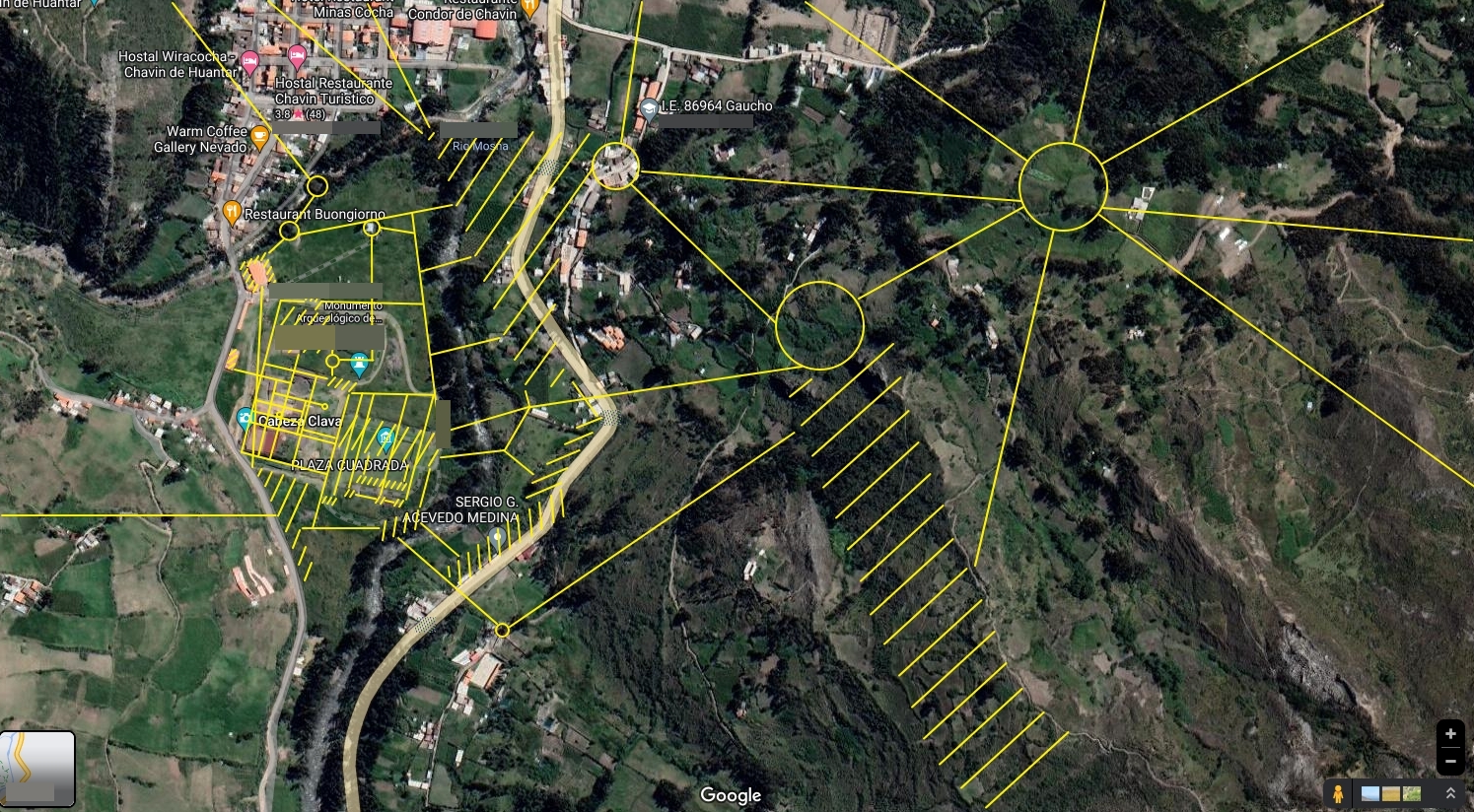
Chavín de Huántar is a major archaeological site in the Andean highlands of Peru, representing the religious and cultural center of the Chavín civilization, flourishing between c. 900 and 200 BC. The site is renowned for its monumental temple complex, advanced hydraulic engineering, and distinctive art style featuring complex iconography. It played a key role in spreading religious ideas and cultural practices throughout the central Andes during the Early Horizon period.
2005–2010 – Site Conservation and New Excavations Led by the National Institute of Culture, Peru
During this period, the National Institute of Culture (INC) coordinated conservation efforts to stabilize the temple complex and prevent further erosion. Excavations overseen by archaeologists including Dr. Johanna Mendoza (Senior Archaeologist, INC) focused on uncovering previously unexplored sectors of the site, including residential areas and outlying ceremonial platforms. The work revealed new architectural details and artifacts, such as finely carved stone stelae and ceramic offerings, deepening understanding of Chavín’s religious functions.
2011–2016 – Geophysical Surveys and Subsurface Mapping
Between 2011 and 2016, international teams including specialists from the University of Tokyo and the Pontifical Catholic University of Peru conducted geophysical surveys (ground-penetrating radar and electrical resistivity) under the direction of Prof. Hideki Sato (University of Tokyo). These surveys mapped subsurface features without invasive excavation, revealing hidden galleries, water channels, and structural layouts crucial to the site’s ritual use. The project was supported by the Japanese Society for the Promotion of Science and the Peruvian Ministry of Culture.
2017–2020 – Excavation of the New Temple Sector and Iconographic Analysis
Excavations led by Dr. Ana María Paredes (Pontifical Catholic University of Peru) concentrated on the so-called New Temple sector, uncovering complex stone carvings and ritual objects dating from the site’s peak occupation. Art historians and archaeologists, including Dr. Luis Benavente and Dr. Claudia Rivera, analyzed iconography on stone sculptures and ceramics, linking them to Chavín cosmology and religious practices. This work refined the chronology of temple expansions and ritual developments.
2015–2025 – Anthropological and Bioarchaeological Research Including John Rick and Stanford University Collaboration
Anthropologist John Rick, affiliated with Stanford University, contributed significantly to bioarchaeological studies related to Chavín de Huántar, focusing on human remains, mortuary practices, and social organization. His research, in collaboration with Stanford teams, has provided insights into the population’s health, diet, and ritual behavior. Though his primary fieldwork dates earlier, ongoing analyses and publications from 2015 to 2025 have advanced understanding of Chavín society through multidisciplinary approaches, including stable isotope analysis and paleopathology.
2021–2023 – Hydraulics and Environmental Reconstruction Studies
Researchers led by Dr. Miguel Castillo (Geologist, National University of San Marcos) studied the sophisticated hydraulic system at Chavín de Huántar, including underground water channels and drainage systems. Environmental sampling and sediment analysis helped reconstruct past climate conditions and agricultural practices supporting the urban population. Collaborations involved specialists from the University of California, Berkeley, and the Peruvian Geological Survey.
2024–2025 – Public Archaeology and Community Engagement Initiatives
Recent efforts have focused on promoting site protection through community involvement and sustainable tourism. The Ministry of Culture of Peru, in cooperation with UNESCO and local indigenous groups, launched programs to educate visitors about Chavín’s cultural significance. Archaeologists including Dr. Ana María Paredes and Dr. Johanna Mendoza have participated in public lectures and interpretative projects. Conservation efforts continue, funded by Peruvian government grants and international heritage organizations.
Summary
The Chavín de Huántar site remains a cornerstone for understanding early Andean civilization. Research from 2005 to 2025 has combined conservation, innovative geophysical surveying, detailed excavation, and interdisciplinary environmental and anthropological studies. Key figures include Dr. Johanna Mendoza and Dr. Ana María Paredes (Peruvian National Institute of Culture and Pontifical Catholic University), Prof. Hideki Sato (University of Tokyo), Dr. Miguel Castillo (National University of San Marcos), and anthropologist John Rick of Stanford University. Their work has elucidated Chavín’s monumental architecture, complex hydraulic engineering, rich iconographic traditions, and social structure, while community engagement initiatives help preserve this emblematic site for future generations.