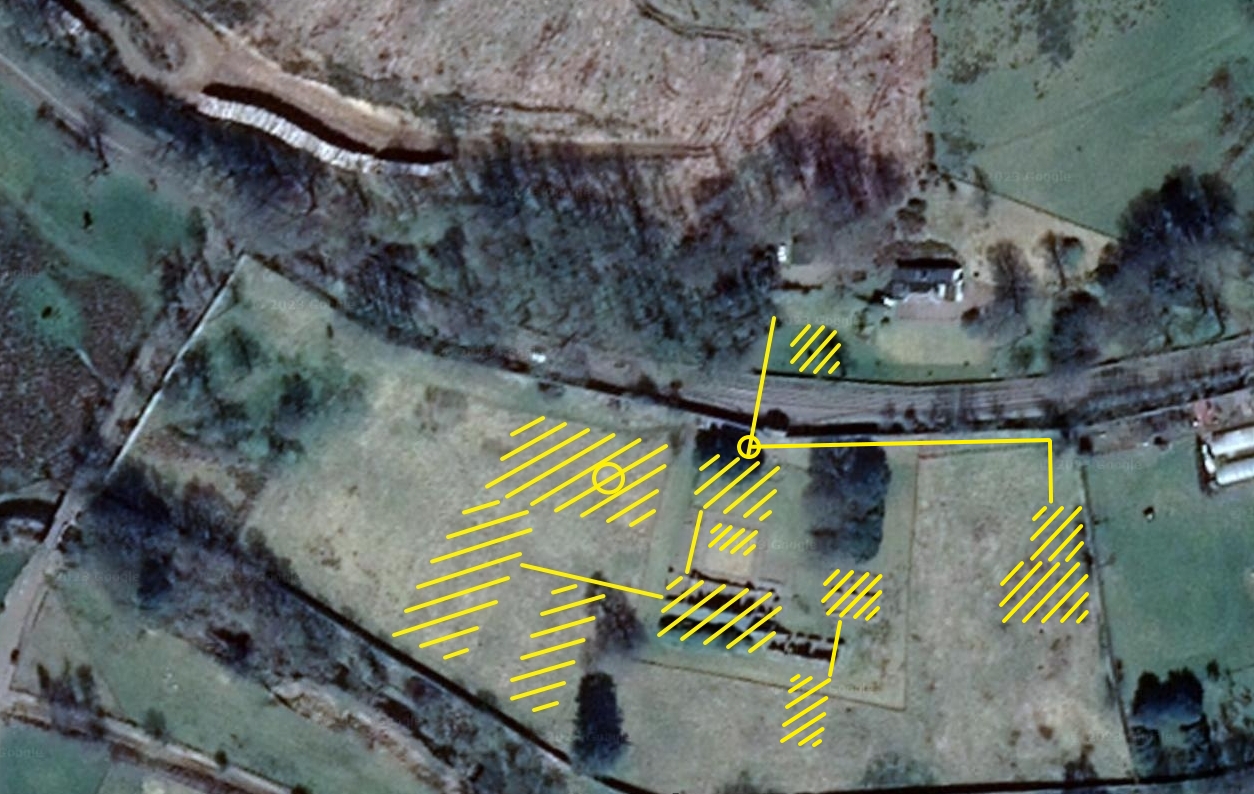
Deer Abbey, located near Old Deer in Aberdeenshire, Scotland, was founded in 1219 by William Comyn, Earl of Buchan, and populated by Cistercian monks from Kinloss Abbey. The site is closely connected with the earlier Gaelic monastery known for the Book of Deer, the earliest surviving Scottish Gaelic manuscript dating from the 10th century.
2009–2016 – Preliminary Desk-Based Assessments and Field Evaluations
From 2009 to 2016, Aberdeenshire Council Archaeological Services and GUARD Archaeology conducted surveys and test pits around Old Deer. These efforts established the archaeological context for subsequent excavations but did not directly expose medieval monastic remains.
2017 – Excavation Directed by Ali Cameron (Cameron Archaeology Ltd.)
In June–July 2017, a key excavation was led by Ali Cameron, Lead Archaeologist at Cameron Archaeology Ltd., in partnership with Aberdeenshire Council and supported by local volunteers and the Young Archaeologists’ Club. Archaeologist and PhD student Alice Jaspars took part in fieldwork. The team uncovered medieval post-hole structures, a stone hearth, and charcoal dated by radiocarbon analysis between 1147–1276 AD, confirming monastic activity at the site. Funding came from The Book of Deer Project and heritage organizations.
2018 – Extended Excavation Campaign
Ali Cameron again directed an extended excavation in summer 2018, involving over 80 volunteers and local schools. The team discovered earlier post-hole features, a stone wall section, an inscribed stone bearing a Solomon’s Knot, and artifacts including Rhenish and Cologne pottery, as well as evidence of fish-trap water management. This campaign was funded by the National Lottery Heritage Fund as part of The Book of Deer Project.
2022 – Large-Scale Excavation Connected to Book of Deer Display
Between May and September 2022, Cameron Archaeology Ltd., under Ali Cameron’s leadership, conducted extensive excavations near Deer Abbey, coinciding with the Book of Deer’s display in Aberdeen. The team uncovered medieval cultivation soil, post-holes, and foundational features associated with the early monastery, reinforcing its location. Volunteers and students contributed under professional guidance. Funding came from the National Lottery Heritage Fund.
Environmental Sampling and Radiocarbon Dating (2017–2022)
Environmental samples recovered during excavations were analyzed at the University of Aberdeen’s Department of Archaeology and dated via radiocarbon techniques at the Scottish Universities Environmental Research Centre (SUERC), a leading radiocarbon dating facility. These analyses, overseen by Ali Cameron, confirmed medieval and early medieval occupation phases between the 7th and 12th centuries.
2023–2024 – Geophysical Surveys by Rose Geophysical Consultants
In 2023 and 2024, geophysical surveys (ground-penetrating radar and resistivity) led by Rose Geophysical Consultants, working with Cameron Archaeology Ltd., mapped subsurface features around the abbey, helping identify potential targets for further excavation. This collaboration with Aberdeenshire Council’s heritage services enhanced understanding of the site’s layout.
Summary
Deer Abbey has been the focus of comprehensive archaeological research led by Ali Cameron (Lead Archaeologist, Cameron Archaeology Ltd.) with significant contributions from Alice Jaspars (archaeologist, PhD student) and survey work by Rose Geophysical Consultants. Supported by Aberdeenshire Council, the National Lottery Heritage Fund, and The Book of Deer Project, this work has uncovered post-hole structures, hearths, inscribed stones, and medieval artifacts that provide strong evidence for the location and nature of the early Gaelic monastery and later Cistercian abbey. Radiocarbon dating and geophysical surveys have been key to confirming phases of occupation and guiding excavations, advancing knowledge of early Scottish monasticism and Gaelic cultural heritage.