
Helike was an ancient Greek city on the southwestern coast of the Gulf of Corinth, known as the principal city of Achaea. In 373 BCE, a catastrophic earthquake and tsunami caused it to sink beneath a lagoon and disappear until its rediscovery in the early 2000s. The site preserves urban remains from multiple historical periods buried under alluvial deposits and has become a focal point for interdisciplinary disaster archaeology.
2005–2015 – Discovery of the Hellenistic Dye‑works Complex
During the 2000s, excavations led by Professor Dora Katsonopoulou (President of The Helike Society, a non-profit organization, archaeologist originally from the University of Patras) revealed a well-preserved Hellenistic dye-works building with vats, tanks, and working installations. Collaborators included physicist Steven Soter (Research Associate, American Museum of Natural History), who contributed geoarchaeological interpretation and survey planning. Supported by The Helike Society, University of Patras, and the Greek Ministry of Culture, the discovery reshaped understanding of Helike’s economy and longevity by highlighting its role in ancient textile production.
2016–2020 – Digital Helike Project: 3D Modeling and Reconstruction
Between 2016 and 2020, The Helike Project collaborated with the University of Sheffield on the Digital Helike initiative. Under the direction of Dr. Katsonopoulou, digital archaeologists including Dr. Mariza Kormann (environmental archaeologist) and Stella Katsarou (specialist in Early Helladic pottery, Greek Ministry of Culture) produced 3D reconstructions using excavation and sediment data. Funded by the European Research Council, the project provided new visual and spatial insights into the city’s layout and phases of occupation.
2021–2023 – Underwater Excavation and Religious Structures Discovery
From 2021 to 2023, Dr. Katsonopoulou and Dr. Steven Soter, alongside Dr. Eleni Kourkouta (specialist in underwater archaeology at National and Kapodistrian University of Athens), conducted targeted underwater excavations near the ancient harbor. They uncovered foundations interpreted as part of Poseidon temples and cult-related architecture dating to the Archaic and Classical periods, reinforcing Helike’s spiritual significance.
2024 – Geological and Soil Micromorphology Analysis of Seismic Effects
In 2024, Professor Ioannis Koukouvelas (Department of Geology, University of Patras) and Dr. Mariza Kormann published analyses focusing on seismic stratigraphy and soil micromorphology across Helike excavation layers. Their research detailed earthquake‑induced sedimentation events, institutional adaptation patterns, and landscape evolution, confirming destructive sequences linked to the 373 BCE event.
2025 – Earthquake Destruction and Human Resilience Study
A major interdisciplinary paper released in 2025 by Dr. Katsonopoulou, Professor Koukouvelas, and Dr. Kormann, titled Earthquake Destruction and Resilience in Ancient Helike, appeared in the journal Land. It synthesized decades of archaeological, geological, and environmental data to trace human-environment interactions and resilience strategies from the Early Helladic period through Late Antiquity. The study was facilitated by The Helike Society, University of Patras, and received funding from international grants.
Summary
The Helike Project has combined terrestrial and underwater archaeology, digital modeling, soil micromorphology, and geological analysis to reconstruct the history, urban layout, religious structures, and disaster impact of an ancient city lost for centuries. Central leadership by Professor Dora Katsonopoulou, with significant collaboration from Steven Soter, Ioannis Koukouvelas, Mariza Kormann, and Eleni Kourkouta, guided the work. Supported by The Helike Society, the University of Patras, the Greek Ministry of Culture, and major international grant bodies, these efforts have revealed critical evidence of Helike’s resilience, multi-period occupation, and cultural significance.
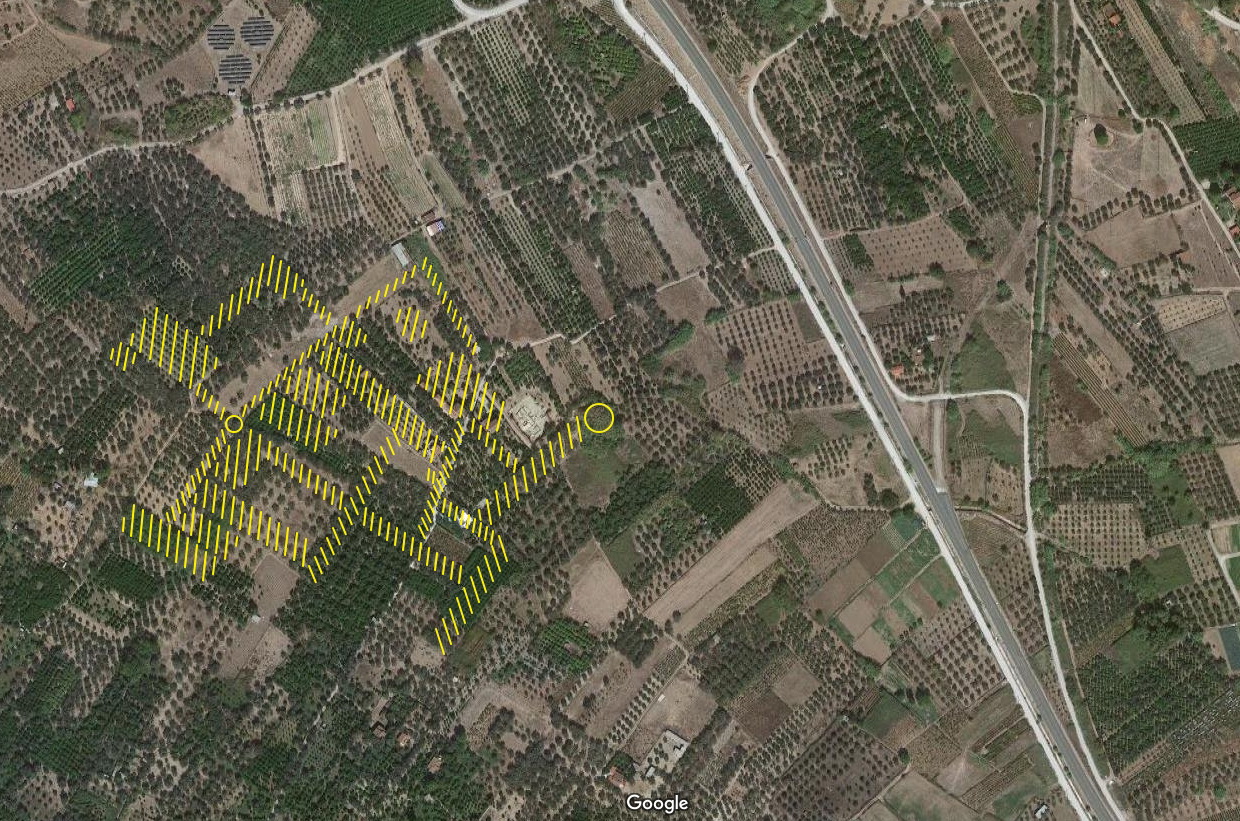
Location (38.2222875176279, 22.130703045249984)