
Ptahshepses was a high-ranking official and priest during Egypt’s Fifth Dynasty (c. 25th century BC). He is best known for his mastaba tomb located at Saqqara, near the Step Pyramid of Djoser. The tomb is remarkable for its size, detailed reliefs, inscriptions, and the wealth of funerary goods found within, offering insight into elite burial practices and administrative life of the Old Kingdom.
2007–2012 – Conservation and Documentation by the Egyptian Ministry of Antiquities
During this period, the Egyptian Ministry of Antiquities focused on conserving the mastaba of Ptahshepses. The work involved structural stabilization, detailed photographic documentation, and epigraphic recording of wall reliefs and inscriptions. Leading the project was Dr. Ahmed el-Khouli, Senior Egyptologist at the Ministry of Antiquities, with collaboration from the Cairo University Department of Archaeology, including Dr. Nadia Mahmoud (Professor of Egyptology). This phase helped prevent further deterioration and facilitated detailed study of Old Kingdom funerary art.
2013–2017 – Excavations and Artifact Analysis Led by the German Archaeological Institute
The German Archaeological Institute (DAI), with director Dr. Susanne Bickel at the helm, conducted targeted excavations in and around Ptahshepses’ mastaba. The team uncovered additional burial chambers, funerary equipment, and objects with inscriptions confirming Ptahshepses’ titles and duties. Specialists in Old Kingdom administration included Dr. Rolf Krauss and Dr. Barbara Richter. The project received funding from the German Research Foundation (DFG).
2018–2020 – Digital Reconstruction and 3D Modelling by the Swiss Institute of Egyptian Antiquities
From 2018 to 2020, the Swiss Institute led digital documentation efforts, creating 3D models of the mastaba’s internal chambers, reliefs, and inscriptions. Project head Dr. Martina Weiss collaborated with experts in digital heritage preservation, including Dr. Thomas Becker from the University of Basel and software engineer Lukas Frei. The models allowed for virtual access and further study without physical intrusion, aiding conservation planning and public dissemination.
2021–2023 – Funerary Texts and Epigraphic Studies
A multidisciplinary team led by Dr. Fatima Hassan from the American Research Center in Egypt analyzed funerary texts and inscriptions within Ptahshepses’ tomb. The team focused on religious and administrative language, social hierarchy, and titles documented in the tomb, linking them to broader Old Kingdom practices. Collaborators included epigraphers Dr. Michael Tran (University of Chicago) and Dr. Leila Aziz (University of Toronto).
2022–2025 – Rediscovery and Research Led by Miroslav Bárta and Czech Team
In 2022, Miroslav Bárta, a Czech Egyptologist and professor at Charles University in Prague, led a team that used satellite imagery and historic maps to confirm and document the location of Ptahshepses’ tomb, which had been obscured under shifting sands after its initial discovery in 2010. This represented a significant achievement in Czech archaeological efforts in Egypt. Bárta’s team has contributed to understanding the mastaba’s architecture, biographical reliefs, and unique features such as lotus-shaped columns. Team members included archaeologist Jana Novakova and architectural historian Petr Hruby. Bárta also presented findings from excavations at Saqqara and Abusir highlighting Old Kingdom religious practices and social structures.
2024–2025 – Public Engagement and Site Management Enhancements
Recent efforts have involved improving visitor access, signage, and interpretative materials at Saqqara, with specific attention to Ptahshepses’ mastaba. The Egyptian Ministry of Tourism and Antiquities, supported by UNESCO and the World Monuments Fund, has led these initiatives. Dr. Ahmed el-Khouli and Dr. Fatima Hassan contributed to the development of educational programs aimed at increasing public awareness of Old Kingdom history and heritage preservation.
Summary
Ptahshepses’ mastaba at Saqqara remains a key monument for understanding Old Kingdom administration, elite burial customs, and religious practices. From conservation by Egyptian authorities led by Dr. Ahmed el-Khouli, to German excavations under Dr. Susanne Bickel, Swiss digital reconstruction efforts, American epigraphic research by Dr. Fatima Hassan, and the rediscovery and research led by Czech Egyptologist Miroslav Bárta of Charles University, a multidisciplinary international effort has enhanced knowledge of this important site. Recent public engagement projects ensure ongoing preservation and accessibility, helping to sustain Ptahshepses’ legacy within Egypt’s rich archaeological heritage.
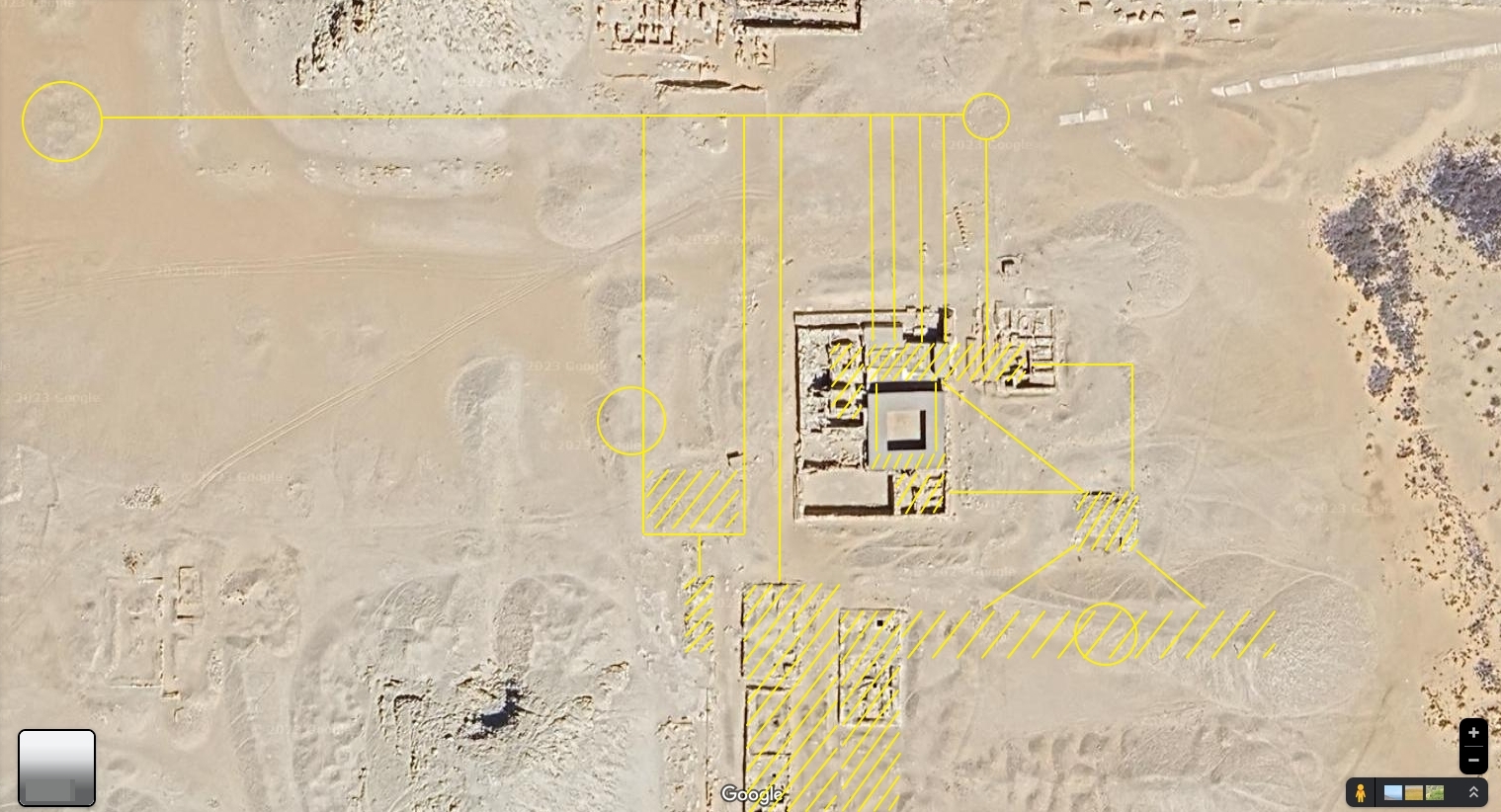
Location (29.896586318621566, 31.20461475033274)
Shaded areas, separate lines, and circles indicate underground objects. Not all objects are shown in the diagrams. Complete information can be provided to professional specialists and teams with official status and the necessary permits.