
Stonehenge, situated on Salisbury Plain in Wiltshire, England, is a globally recognized Neolithic and Bronze Age monument. Built between approximately 3000 BCE and 2000 BCE, it consists of concentric circles of massive sarsen stones and smaller bluestones from Wales. Its preservation offers exceptional insights into prehistoric ritual, social organization, and astronomical alignments. The surrounding landscape, also rich in monuments, suggests Stonehenge was part of a larger ceremonial complex central to Neolithic Britain.
2005 – Blick Mead: Mesolithic Continuity Near Stonehenge
Excavations at Blick Mead, one mile from Stonehenge, began in 2005 under Professor David Jacques (University of Buckingham, senior lecturer in archaeology). Funded by the University of Buckingham and private donors via the Blick Mead Charitable Trust, the project uncovered evidence of near-continuous human presence dating back to 7900 BCE. Finds included hearths, flint tools, and butchered animal bones. Team members included Dr Nick Snashall (archaeologist, Wiltshire Wildlife Trust) and Dr Julie Gardiner (environmental specialist, University of Bradford). These discoveries shifted understanding of the landscape, revealing deep-rooted continuity long before the monument’s construction.
2006–2009 – Stonehenge Riverside Project
Funded by the Arts & Humanities Research Council, Stonehenge Riverside Project was directed by Professor Mike Parker Pearson (University of Sheffield). Co-directors included Professor Vince Gaffney (University of Birmingham) and Professor Chris Tilley (University College London). The project linked Stonehenge with nearby sites like Durrington Walls and discovered Bluestonehenge, a stone circle on the River Avon. The work indicated that Stonehenge was part of a ceremonial route and emphasized its role as a unifying site for dispersed Neolithic communities. Key contributors included Dr Alice Roberts (University of Birmingham, osteoarchaeologist) and Dr Joshua Pollard (University of Southampton, field director).
2008 – Inner Circle Excavation by Darvill & Wainwright
In April 2008, Professor Timothy Darvill (Bournemouth University) and Professor Geoffrey Wainwright (Society of Antiquaries of London; former Chief Archaeologist of English Heritage) carried out the first modern excavation inside Stonehenge’s inner circle since 1964. Sponsored by English Heritage and Bournemouth University, the trench targeted the Q and R Holes, providing refined dating of the Double Bluestone Circle (~2300 BCE). Their work supported one theory of Stonehenge as a healing site. The team included Dr Miles Russell (Bournemouth, senior lecturer) and Dr Kate Welham (then at Southampton, now Bournemouth, field archaeologist).
2015 – World Heritage Site Geophysical Survey: Revealing the Hidden Landscape
A large-scale geophysical survey in 2015 by Historic England explored parts of the southern Stonehenge World Heritage Site. Led by Neil T. Linford, Paul K. Linford, and Andy W. Payne, the project used caesium magnetometry and ground-penetrating radar across 17–22 hectares. Funding came from Historic England and the Stonehenge WHS Landscape Project. The survey revealed ring-ditches, large pits, and previously unknown earthworks. Collaborators included Professor Christopher Gaffney (University of Bradford, archaeological science), Professor Vince Gaffney (University of Birmingham), and Dr Zoe Edwards (senior geophysicist, Historic England). The results expanded the known extent and complexity of ritual features around Stonehenge.
2025 – Newall Boulder Provenance Study
In 2025, a detailed analysis of the so-called Newall Boulder, recovered during 1924 excavations, was conducted by Aberystwyth University. Leading the project was Professor Richard E. Bevins (Department of Geography & Earth Sciences). Funding came from Aberystwyth University and the British Geological Survey. Using thorium and zirconium trace analysis, researchers confirmed the boulder originated in the Preseli Hills, supporting the idea that bluestones were transported by Neolithic people rather than by glacial action. The team included Dr Nick J. G. Pearce (geochemist, Aberystwyth) and Professor Brian Evans (petrologist, Cardiff University). The findings reinforced models of human-led long-distance stone transport using sledges and timber trackways.
Summary
Over the past two decades, Stonehenge has been the subject of some of the most advanced archaeological investigations in Britain. From Mesolithic continuity at Blick Mead, to landscape integration through the Riverside Project, careful excavation inside the monument, remote sensing surveys, and high-resolution geochemical studies—each project has significantly deepened our understanding. These efforts, led by respected scholars with institutional and financial backing, have revealed Stonehenge not as an isolated monument, but as a complex, evolving ceremonial hub at the heart of prehistoric Britain.
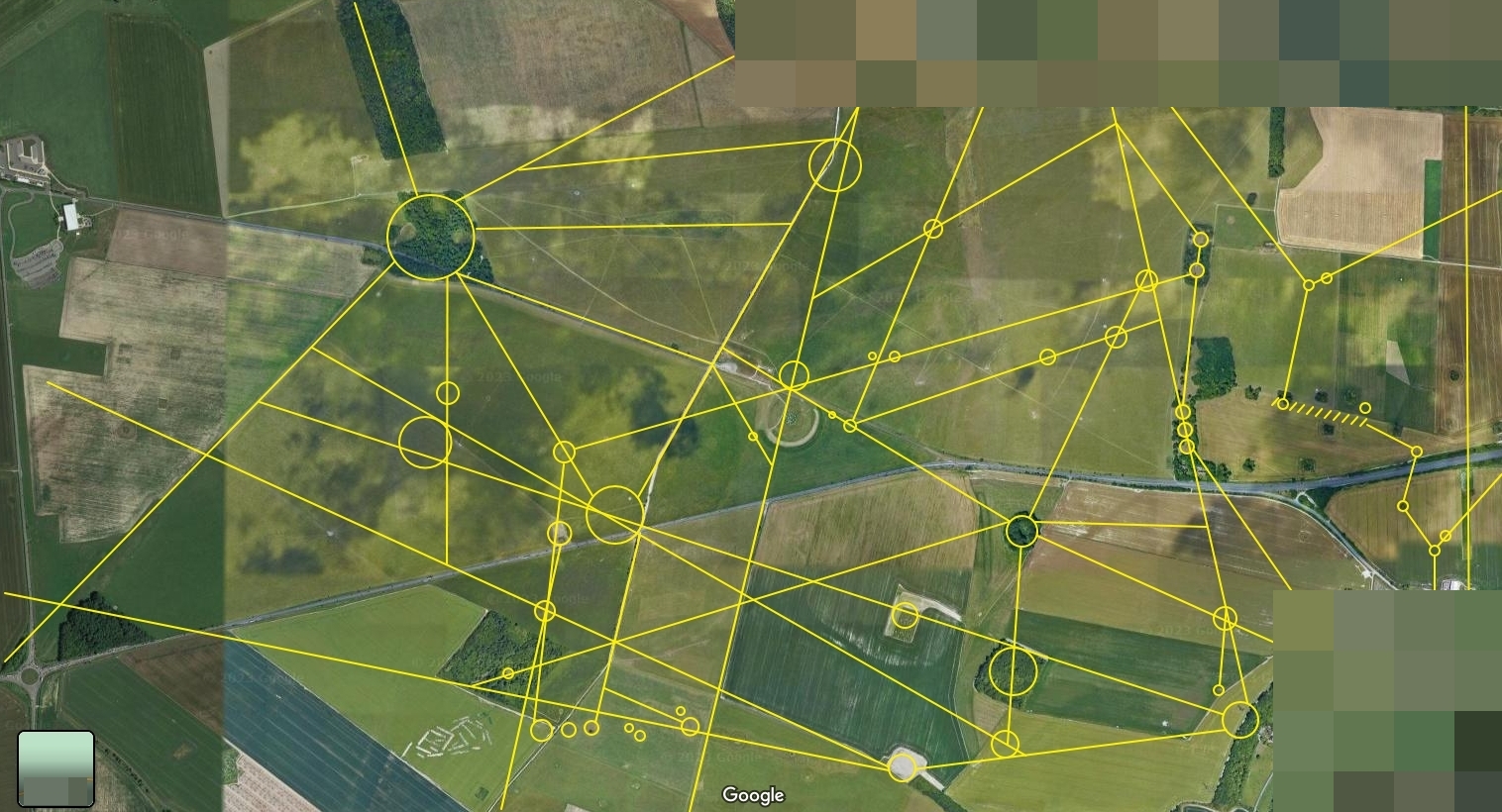
Location (51.178570867908654, -1.8258778221465732)