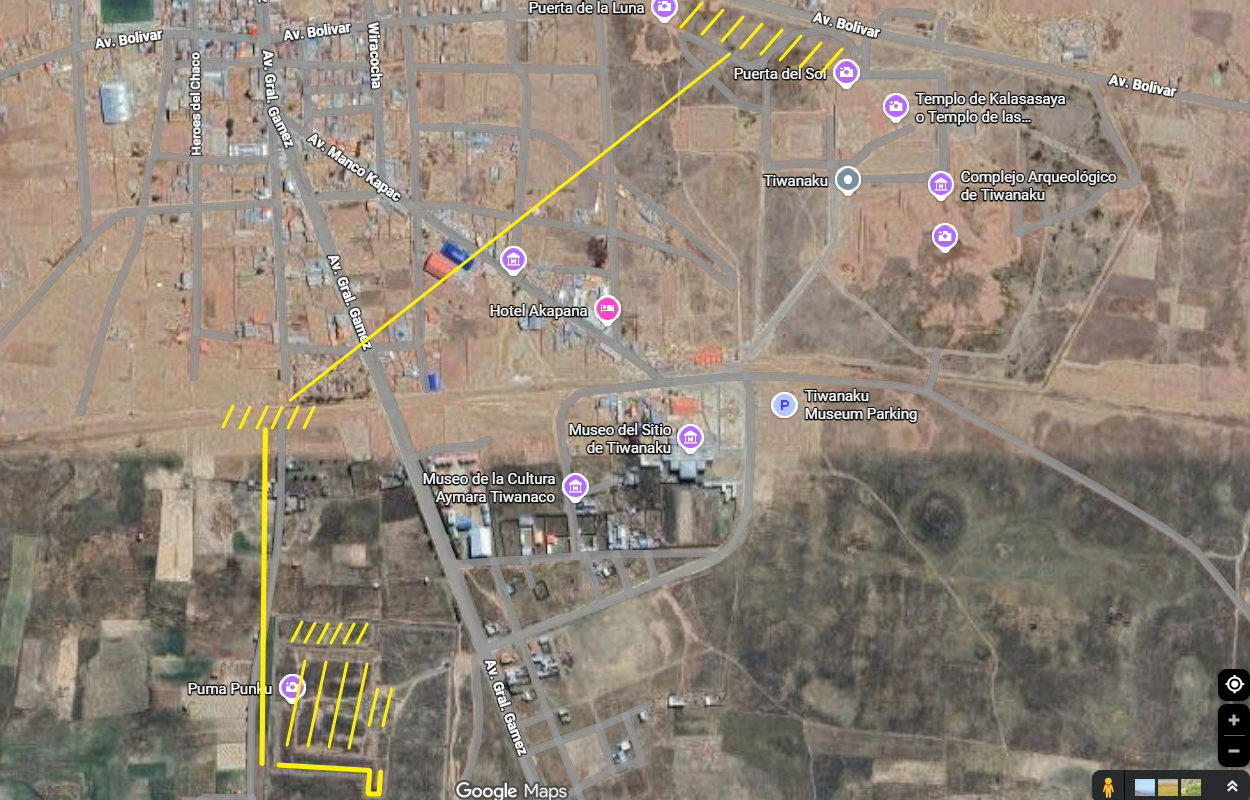
The ancient archaeological complex of Tiwanaku, situated in the high-altitude Altiplano of western Bolivia near Lake Titicaca, remains one of the most enigmatic epicenters of pre-Columbian monumental architecture. Serving as the capital of a powerful vast empire that flourished between 300 AD and 1000 AD, the site features advanced subterranean structures and surface megaliths that challenge conventional understanding of ancient Andean engineering. Modern systematic exploration has increasingly focused on the complex drainage networks, hidden chambers, and monumental platforms buried beneath the surface, revealing a deeply integrated subterranean planning scheme that served both ritualistic and practical water-management purposes.
Initial scientific attention was brought to the site by early pioneering figures, but the foundation for modern stratigraphic and underground exploration was solidified in the mid-twentieth century. Carlos Ponce Sanginés, a prominent Bolivian archaeologist and director of the Centro de Investigaciones Arqueológicas en Tiwanaku, spearheaded comprehensive excavations that cleared the Semi-Subterranean Temple. This unique sunken courtyard, excavated nearly two meters below the surrounding terrain, is lined with 175 carved limestone tenoned heads projecting from the walls. Ponce Sanginés, working alongside local teams and backed by the Bolivian Ministry of Education and Culture, meticulously mapped the intricate stone conduits running underneath the floor, which successfully prevented the sunken courtyard from flooding during torrential Altiplano rains.
Subsequent large-scale scientific campaigns shifted toward deeper underground anomalies using advanced subsurface imaging. From the late 1980s through the 2000s, Alan Kolata, a leading American anthropologist and Professor of Anthropology at the University of Chicago, directed the multi-year Tiwanaku Archaeological Project. Funded heavily by the National Science Foundation and the National Geographic Society, Kolata’s team brought together a multidisciplinary task force, including Senior Research Associate Oswaldo Rivera Sundt of the National Institute of Archaeology of Bolivia. Their excavations focused on the Akapana pyramid, a massive terraced mound concealing a complex, internal network of subterranean stone channels. This hidden plumbing system functioned as a monumental water feature, funneling water from a summit pool down through the core of the pyramid to simulate a sacred mountain spring.
In recent years, the implementation of non-invasive remote sensing technology has radically redefined the known boundaries of Tiwanaku’s subterranean infrastructure. Under the authorization of the Ministry of Cultures and Tourism of Bolivia and the direct supervision of CIAAAT (Centro de Investigaciones Arqueológicas, Antropológicas и Administración de Tiwanaku), spearheaded by executive director Julio Condori, groundbreaking projects have utilized ground-penetrating radar and drone-based magnetometry. These investigations, supported by international experts such as Alexei Vranich, a Research Associate at the University of California, Berkeley, discovered a vast network of undetected underground anomalies. These include buried residential sectors, water canals, and a series of unfilled subterranean chambers adjacent to the main ceremonial platforms, suggesting that a significant portion of the civic-ceremonial center remains unexcavated beneath the soil.
A short distance southwest of the main Tiwanaku core lies Puma Punku, a terraced earthen mound faced with megalithic blocks that represents the absolute zenith of the region’s stone-cutting technology. Unlike the main complex, Puma Punku is renowned for its scattered, highly precise geometric blocks composed of red sandstone and exceptionally hard gray andesite. Extensive structural analysis by modern architectural historians, including Jean-Pierre Protzen, Professor Emeritus of Architecture at the University of California, Berkeley, demonstrated that these blocks were pre-fabricated using a sophisticated modular design system. The stones feature uniform interior right angles, complex rebates, and interlocking “H-blocks” that were once secured with poured copper-arsenic bronze clamps. Subsurface excavations around Puma Punku have exposed massive foundational slabs weighing up to 130 metric tons, resting on perfectly leveled layers of river gravel, which acted as a shock-absorbing foundation against seismic activity.

Location (-16.555652811049047, -68.67308533267322)