
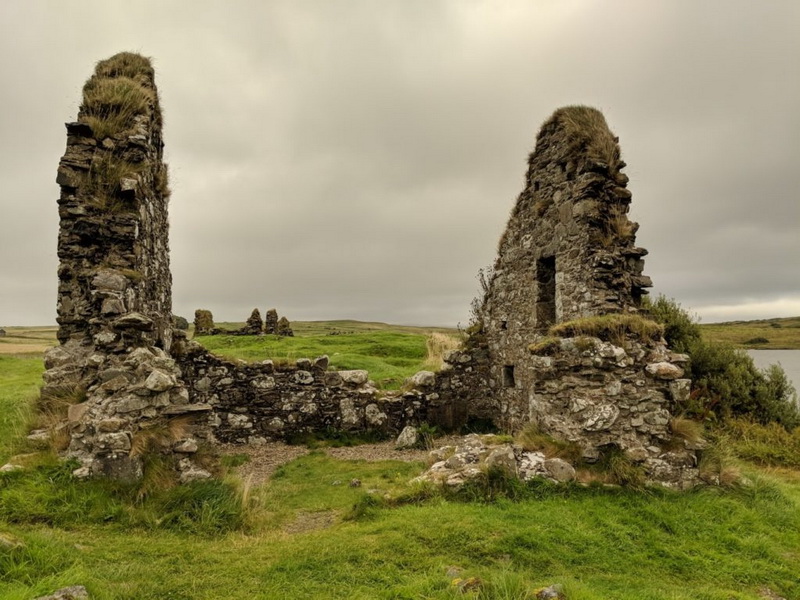
 Archaeologists reveal evidence of a previously unknown royal stronghold at Finlaggan on the Isle of Islay. The site, long associated with the later Lords of the Isles, now shows clear remains of a substantial 12th–13th-century castle that likely served as a ceremonial and administrative centre for early rulers of western Scotland.
The findings result from nearly three decades of analysis of excavations carried out between 1989 and 1998. Dr. David Caldwell, who led the fieldwork and later compiled the results, has published the comprehensive study in The Archaeology of Finlaggan, Islay, which synthesises the excavation data, artefact catalogues and environmental evidence to reconstruct the site’s sequence of occupation.
Archaeological evidence indicates the castle complex was spread across two small islands in Loch Finlaggan. One island bears the remains of a massive rectangular stone tower and associated living quarters; the adjacent island contained courtyards, workshops, kitchens, domestic buildings and a large hall used for feasting. A chapel and burial ground are also attested, giving the complex the range of features normally associated with high-status royal residences. Contemporary reporting highlights the tower’s scale and form as comparable to prominent keeps on the British mainland.
These architectural and material signals support the interpretation that Finlaggan was a focal point of regional power well before the high medieval heyday of the MacDonald Lords of the Isles. The MacDonalds later styled themselves Ri Innse Gall (King of the Isles) and operated a maritime polity that controlled the Western Isles, parts of Argyll and the northwest Highlands; Finlaggan’s long occupation helps explain how such a power base could develop.
Excavations and associated finds — including fittings for document caskets, keys, evidence for administrative buildings and traces of large ceremonial gatherings — point to Finlaggan’s role not only as a domestic stronghold, but also as a centre for governance, justice and ritual. Environmental and material evidence shows phases of earlier prehistoric use and later medieval redevelopment, underlining the site’s deep historical importance in the region.
The new synthesis significantly enhances understanding of medieval Scotland by showing that Finlaggan’s leadership displayed both the architectural ambition and political reach expected of a major regional court. The published volume provides a secure foundation for future study and for public interpretation, and Finlaggan’s visitor centre and trust continue to promote the site’s archaeology to a broader audience.