
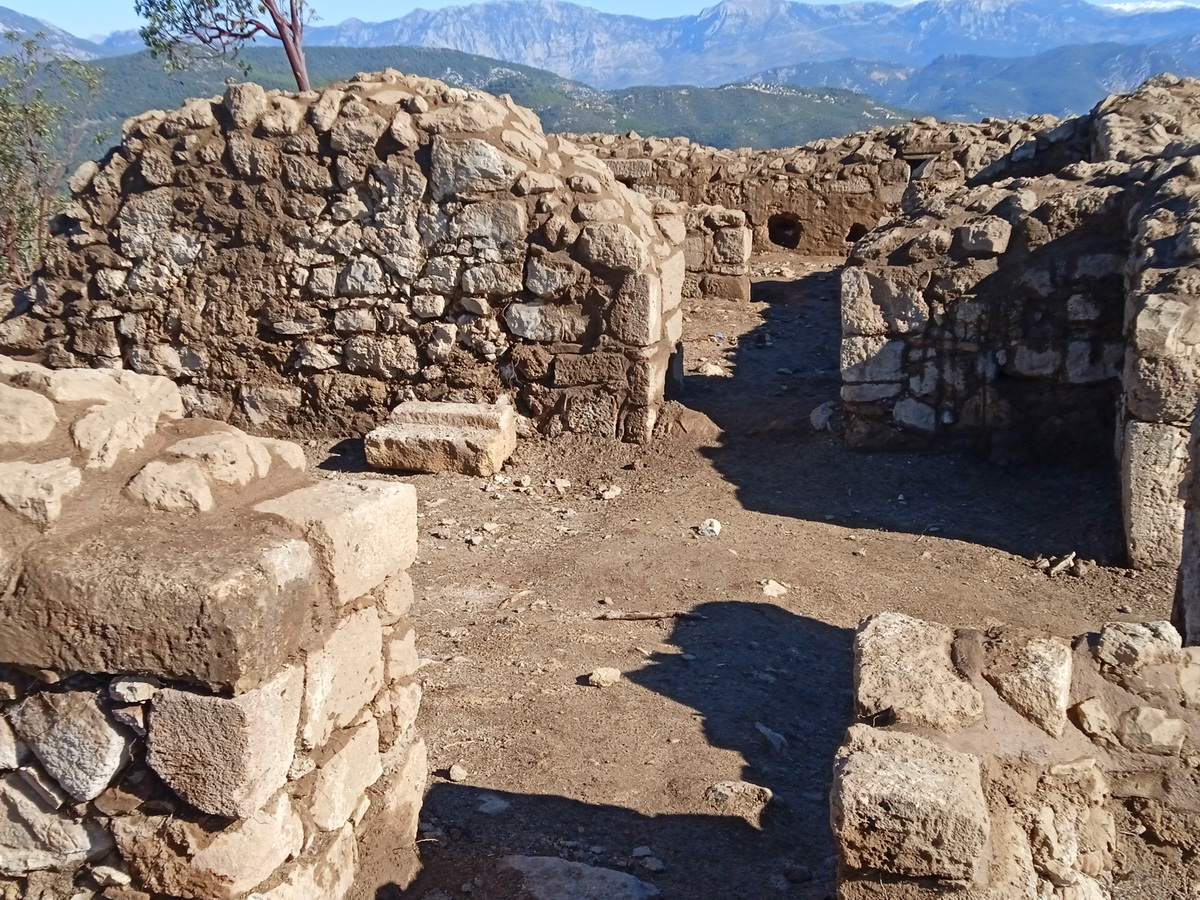
 Archaeologists excavating the ancient city of Syedra in Turkey’s Mediterranean region have uncovered a remarkably well-preserved 1,800-year-old Roman stadium, shedding new light on the sporting and cultural life of this once-thriving port city. Measuring about 200 meters in length and 16 meters in width, the structure was carved directly into the bedrock at an altitude of 340 meters above sea level. This impressive discovery adds another layer to Syedra’s rich archaeological legacy, which spans from the Hellenistic through the Byzantine periods.
Led by Associate Professor Ertug Ergurer from Alanya Alaaddin Keykubat University, the excavation team revealed that much of the stadium had remained hidden for centuries, with only a few seating rows visible before recent work began. The newly uncovered structure could accommodate between 2,000 and 3,000 spectators, marking it as a significant venue for its time.
Situated in the Alanya district of Antalya province, Syedra was continuously inhabited from the ninth century BC and played a key role as a port city linking Mediterranean trade routes. Over the centuries, it witnessed the influences of Hellenistic, Roman, Byzantine, and Anatolian Seljuk civilizations, making it one of the region’s most archaeologically diverse sites.
The northern section of the stadium remains exceptionally well-preserved, showcasing the refined craftsmanship of Roman builders. Although only the stone seating rows survive today, evidence suggests that the upper tiers were once made of wood. The southern end sustained damage due to later fortification walls, but enough of the structure remains to reveal its original grand design.
Inscriptions found throughout Syedra—nearly forty in total—highlight the city’s vibrant athletic traditions, particularly in wrestling and boxing. These texts indicate that the stadium hosted not only athletic contests but also religious festivals and imperial celebrations during the height of Roman rule. The presence of such an elaborate sports facility points to Syedra’s prosperity and elevated status in the Roman era, comparable to other major coastal cities.
The stadium’s architecture reflects masterful Roman engineering. Built directly into the hillside, it required minimal foundations while offering excellent acoustics and sight lines for spectators. This integration of natural landscape and structural design is characteristic of Roman architecture across the empire. The precision of the stonework ranks among the finest examples in Syedra, exemplifying the technical expertise of Roman builders who designed their monuments to endure for centuries.
The stadium joins an impressive ensemble of monuments at Syedra, including a colonnaded street, a grand bathhouse, a council building, and the famed mosaic depicting the twelve labors of Heracles. The city’s extensive water supply system—with cisterns, channels, and reservoirs—likely supported the stadium during major events, providing water for athletes and spectators alike.
The excavation underscores Syedra’s long-standing significance as a center of urban life for nearly 3,000 years. Ongoing research under Turkey’s “Heritage for the Future” project continues to uncover new finds, from Roman-era mosaics to hidden cisterns, deepening our understanding of the city’s development and enduring importance.
Recent discoveries, including statues of the goddess Nike, intricate staircases, and complex hydraulic systems, highlight Syedra’s architectural and cultural sophistication. Future excavations will focus on the areas surrounding the stadium and the city’s residential quarters, aiming to uncover training facilities, changing rooms, or other structures related to Syedra’s athletic life.