
 Archaeologists in Peru have made a remarkable discovery: a multicoloured three-dimensional mural dating back around 4,000 years. The find, uncovered at the Huaca Yolanda site in the Tanguche valley, has shifted the understanding of the Americas’ earliest civilisations.
The mural, measuring three by six metres, features a striking depiction of a large bird of prey with wings spread wide. Its head is adorned with diamond-shaped motifs designed in three dimensions, aligning the mural’s north and south faces. Painted in vivid blue, yellow, red, and black, the wall is covered with intricate friezes.
The imagery provides valuable insight into Peru’s formative period (2000–1000 BC), a time when societies developed more complex social and religious structures. Archaeologist Ana Cecilia Mauricio, who leads the excavation, explained that the artwork reveals “the emergence of social hierarchy in Peru as societies get more complex and become civilisations.”
The double-sided mural formed part of the courtyard of a temple. Its designs depict stylised fish, fishing nets, mythological beings, and star symbols that reflect the spiritual and cosmic worldview of Peru’s early coastal societies. These people lived from both agriculture and the sea, but their society already displayed signs of hierarchy. Shamans, priests, and priestesses were central figures, holding knowledge of medicinal plants, astronomy, and spiritual practices.
One carving appears to show the transformation of a human into a bird, which Mauricio interprets as representing a shaman entering a trance-like state after consuming hallucinogenic plants such as the San Pedro cactus. Such rituals marked important rites of passage and were linked to both spiritual power and social status.
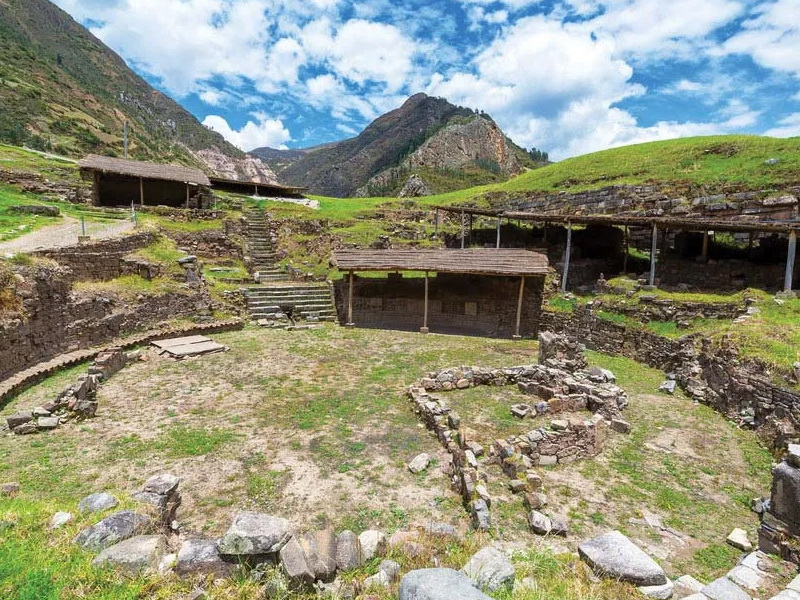
The Huaca Yolanda site likely predates Chavín de Huántar, the famous Andean ceremonial complex, placing it among the earliest monumental religious centres in Peru. However, the discovery faces threats from agriculture, urban development, and looting, which have already damaged nearby ruins. Mauricio, who has studied the site since 2012, stresses the need for stronger protection from Peru’s cultural authorities.
This unprecedented mural not only enriches knowledge of Peru’s pre-Hispanic past but also demonstrates the sophistication and symbolism of early American civilisations.