
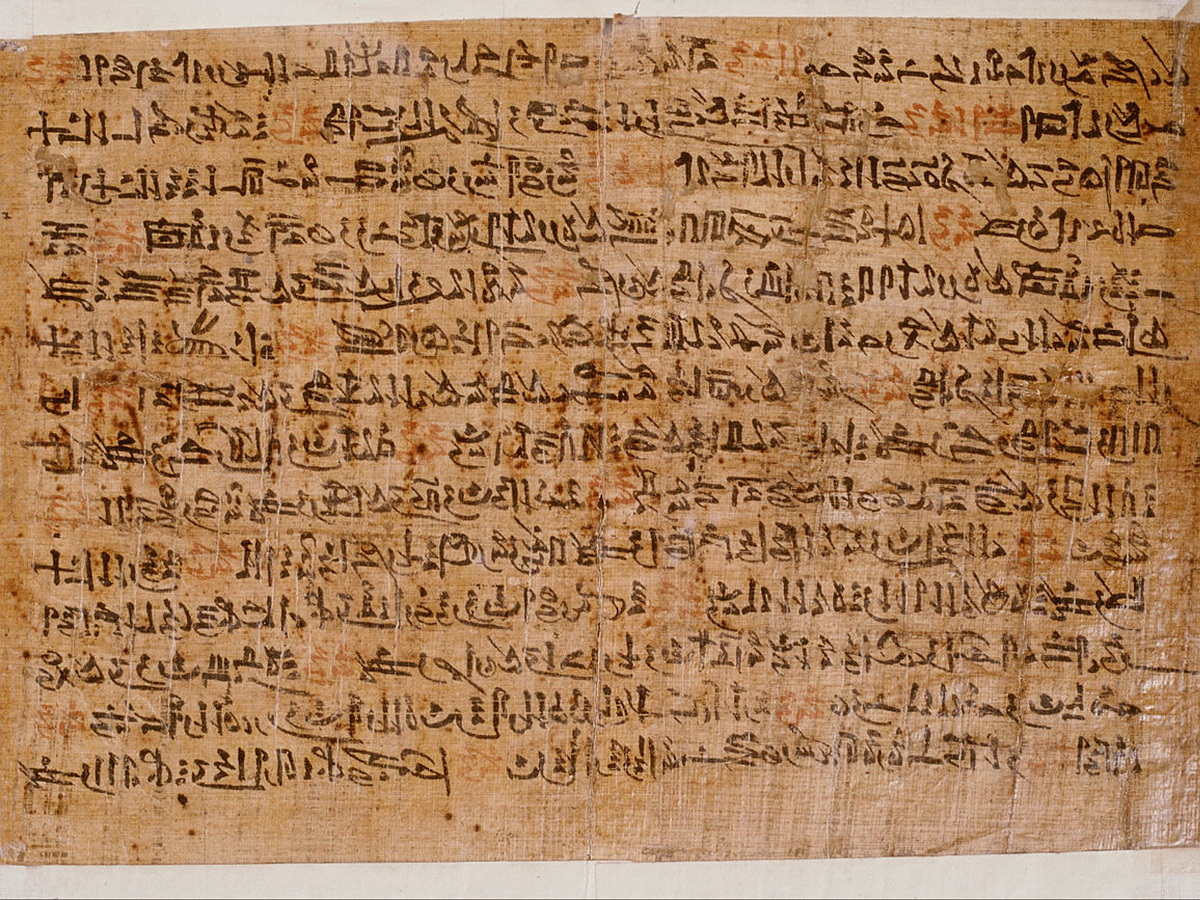
 An ancient Egyptian manuscript, the Ipuwer Papyrus, has captivated both scholars and enthusiasts for its striking parallels to the biblical ten plagues of Egypt. Officially known as Papyrus Leiden I 344 recto, this papyrus offers what many interpret as an Egyptian viewpoint on the catastrophic events recounted in the Book of Exodus. Housed in the Dutch National Museum of Antiquities in Leiden, the manuscript has reignited debates on the historical context of Moses’ confrontation with Pharaoh.
The Lament of Ipuwer
The papyrus is presented as a poetic lament by an Egyptian scribe named Ipuwer, who describes widespread disasters, environmental calamities, and societal collapse. Its vivid passages depict rivers turning to blood, famine, mass deaths, and social upheaval—events that closely resemble the biblical narrative of God’s judgment on Egypt through Moses.
Parallels to the Biblical Plagues
According to Exodus, God inflicted ten plagues to compel Pharaoh to release the Israelites. The first plague transformed the Nile River into blood, killing fish and rendering the water undrinkable. Similarly, the Ipuwer Papyrus states, “There’s blood everywhere – Lo, the River is blood,” echoing the biblical account.
The manuscript also details environmental devastation aligning with multiple biblical plagues. Phrases like “Lo, trees are felled, branches stripped” likely refer to destructive hailstorms that ruined crops, while “Lo, grain is lacking on all sides” illustrates widespread famine. References to “birds find neither fruits nor herbs” evoke the biblical plague of locusts consuming vegetation.
Mass Death and Social Upheaval
Some of the papyrus’s most haunting lines describe mass death and societal collapse. “Groaning is throughout the land, mingled with laments” mirrors Exodus 12:30, which notes that “there was not a house where there was not one dead.” Another line, “Lo, many dead are buried in the river, the stream is the grave, the tomb became a stream,” parallels biblical accounts of widespread fatalities during the plagues.
The papyrus also describes social upheaval, with servants rising and the wealthy reduced to poverty—echoing the biblical narrative of the Israelites departing Egypt with treasures (Exodus 12:35–36).
Scholarly Debate and Dating
Biblical historian Michael Lane suggests the papyrus may have been authored by an eyewitness. He notes, “No conclusive evidence exists to pinpoint the exact date of its composition, but because of its written style, it appears to have been written by an eyewitness.” Scholars commonly place it around the biblical date of 1440 BC, though the official papyrus dates to Egypt’s Nineteenth Dynasty (c. 1295–1186 BC). Many researchers believe it may copy an earlier work, with estimates for the original ranging from 1550 to 1290 BC, potentially aligning with the traditional Exodus timeline.
However, interpretations vary. Critics caution against viewing the papyrus as direct proof of the Exodus. The Reddit Egyptology community describes this link as “a long-standing but thoroughly debunked myth in both academic Egyptology and biblical archaeology.” Skeptics note the text is poetic, fragmentary, and makes no explicit mention of Moses or the Israelites.
Theological Dimension
The text references attacks on Egyptian deities, including Hapi, Heqet, and Ra, suggesting the author perceived these events as divine judgments rather than mere natural phenomena.
Conclusion
The Ipuwer Papyrus concludes with a stark summary: “All is ruin.” This phrase captures the total devastation of environmental, social, and spiritual dimensions, reflecting the layered calamities described in the biblical narrative. Whether approached as historical evidence, literary parallel, or cultural artifact, the Ipuwer Papyrus offers invaluable insight into Egyptian literary traditions and their understanding of national catastrophes, continuing to intrigue scholars and believers alike.