
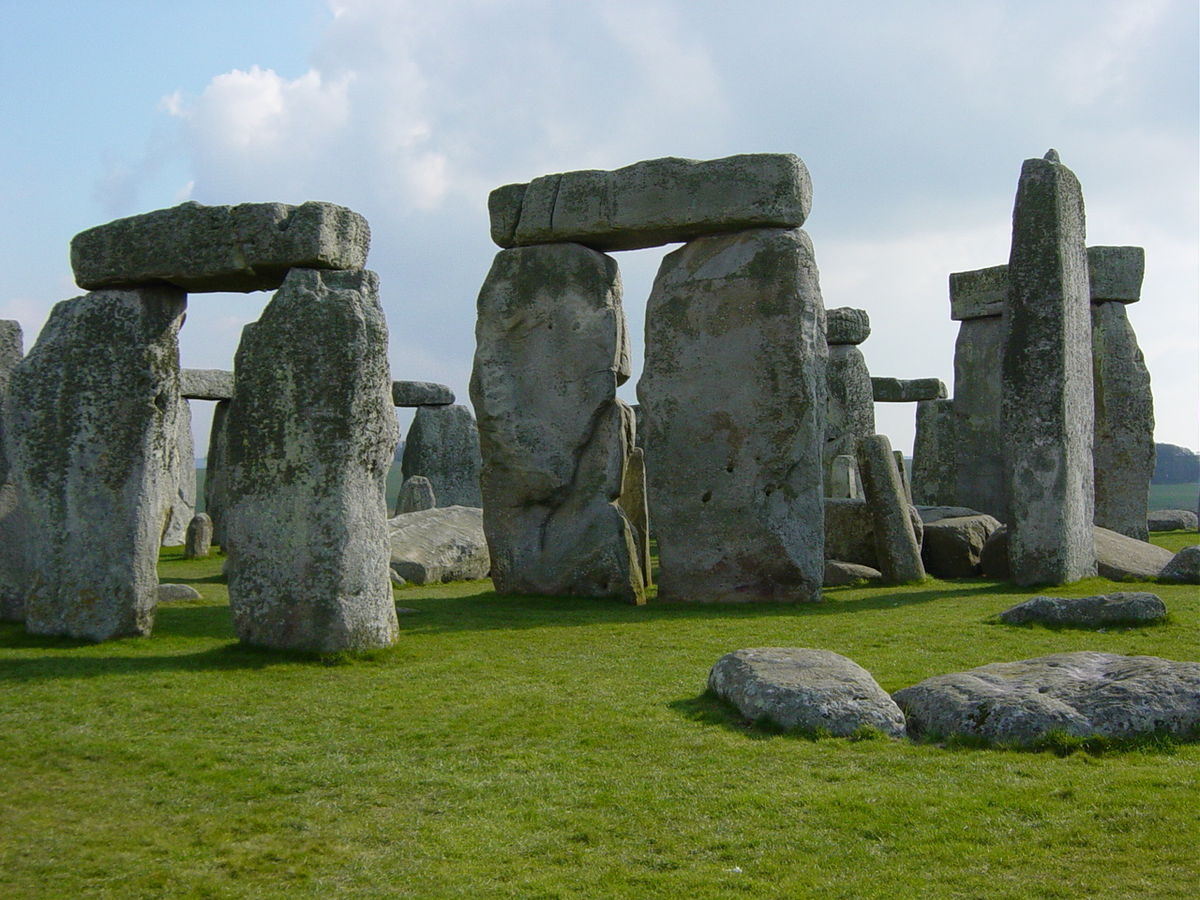
 New archaeological findings have resolved one of Stonehenge’s greatest mysteries, proving that ancient Britons transported massive stone blocks across astonishing distances more than 5,000 years ago. A recent study published in Journal of Archaeological Science: Reports confirms that the monument’s builders moved stones not only from Wales but also from as far as Scotland—an epic journey of over 435 miles (700 km).
The Newall Boulder and Welsh Origins
The research, led by Professor Richard Bevins of Aberystwyth University, focused on the long-debated Newall boulder, a football-sized rock unearthed during excavations nearly a century ago. Through advanced geochemical and microscopic analysis, the team demonstrated that this stone, along with others, was deliberately transported 125 miles (200 km) from Craig Rhos-y-Felin in north Pembrokeshire, Wales. This evidence disproves earlier theories suggesting the stones had been carried by glaciers.
Scotland’s Altar Stone and Long-Distance Transport
Perhaps even more remarkable, previous studies revealed that Stonehenge’s six-ton Altar Stone came from northeastern Scotland. Moving such a massive block across hundreds of miles, without wheeled vehicles or domesticated horses, highlights the extraordinary determination and ingenuity of Neolithic communities.
Engineering Skills and Collaboration
These findings show that Neolithic Britons had planning and organizational abilities that rival modern engineering efforts. Transporting stones weighing several tons over rough terrain would have required strong coordination and cooperation between different tribal groups.
Archaeological evidence from Craig Rhos-y-Felin indicates quarrying operations were active around 3000 BC, with stones carefully selected for qualities beyond construction value. This suggests a sophisticated understanding of geology and possibly spiritual or symbolic reasons for choosing specific stones.
The Sarsen Stones of Wiltshire
The researchers note that if Neolithic communities could move stones from Wales and Scotland, they were certainly capable of transporting the much larger sarsen stones from West Woods in Wiltshire, just 20 miles (32 km) away. These massive blocks, some weighing over 20 tons and standing seven meters (23 feet) tall, would have required less effort compared to the long-distance transport of bluestones or the Altar Stone.
Global Context of Neolithic Transport
The study also emphasizes that the movement of heavy stones was not unique to Britain. Similar feats occurred worldwide during the Neolithic period, with indigenous peoples using ropes, wooden sledges, and timber trackways to achieve remarkable results.
The rediscovery of these ancient achievements underscores the ingenuity, resilience, and shared efforts of communities that created one of the world’s most enduring monuments.